

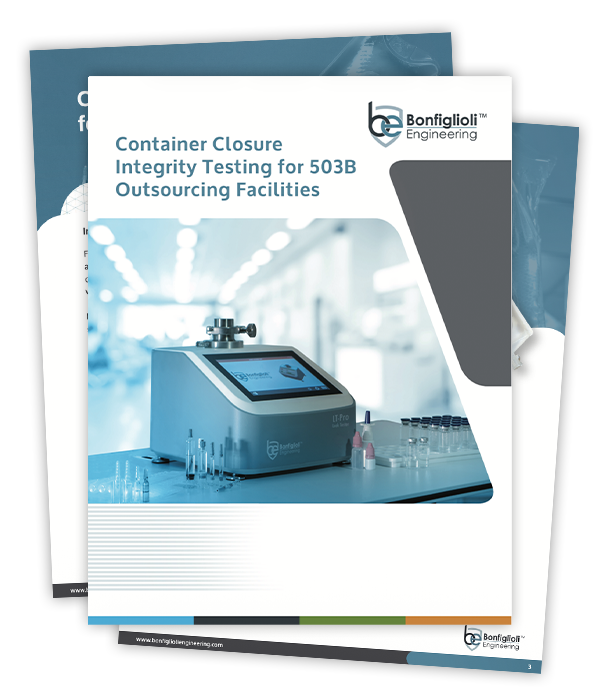
Build a More Inspection-Ready CCIT Program. Download the eBook.

Why 503B Facilities Are Re-Evaluating CCIT
Recent FDA inspection trends show a heightened focus on sterility assurance programs within 503B outsourcing facilities.Warning letters and Form 483 observations frequently reference insufficient scientific justification for integrity testing methods, inadequate validation documentation, or gaps in ongoing performance verification.
Deterministic CCIT systems are increasingly being recognized as the regulatory benchmark for demonstrating scientifically defensible sterility assurance.
“As FDA scrutiny increases, 503B facilities must be able to clearly demonstrate that their CCIT program is not only in place, but scientifically justified, repeatable, and inspection-ready. Deterministic methods provide the level of clarity and defensibility regulators expect.”
— Gianmarco Pincelli, Technical Sales Manager, Bonfiglioli Engineering
Container Closure Integrity Challenges in 503B Facilities
While regulatory expectations continue to evolve, many 503B facilities face practical implementation challenges.
- Limited bandwidth: Internal validation teams often operate with limited bandwidth, making method development, protocol execution, and documentation preparation resource-intensive. When inspection findings arise, facilities need to reassess testing approaches quickly, all while maintaining production continuity.
- Component variability: Changes in vial suppliers, stopper formulations, or IV bag films adds complexity, which can impact integrity performance and require requalification of testing parameters.
- Limited lab footprint: Many facilities operate with limited laboratory space, requiring compact systems with the ability to integrate efficiently into controlled environments without disrupting workflow.
Addressing these challenges requires solutions designed not only for technical performance, but also for practical implementation within the realities of 503B operations.

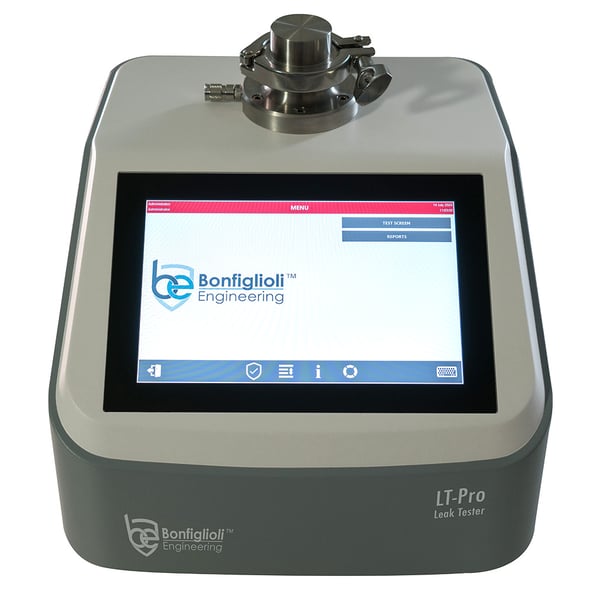
LT Pro – Syringe and Vial Integrity Testing
The LT Pro is a compact, laboratory-based system designed for deterministic leak detection in prefilled syringes and small-volume vials.
This LT Pro system provides:
-
Non-invasive, non-destructive container closure integrity testing for rigid and flexible packaging formats
-
Interchangeable tooling engineered to accommodate a wide variety of filled container types.
-
Multiple test methods, including vacuum and pressure decay, with selectable accuracy down to 1 µm.
-
Compact, ergonomic design suited to laboratory environments and small-batch workflows.
-
Easy connection for data storage, analysis, and documentation to support traceable results.
-
Designed to support modern pharmaceutical quality requirements, with alignment to USP <1207>, ASTM F2338, EU Annex 1, and 21 CFR Part 11 for deterministic CCIT, compliant data handling, and traceable documentation.
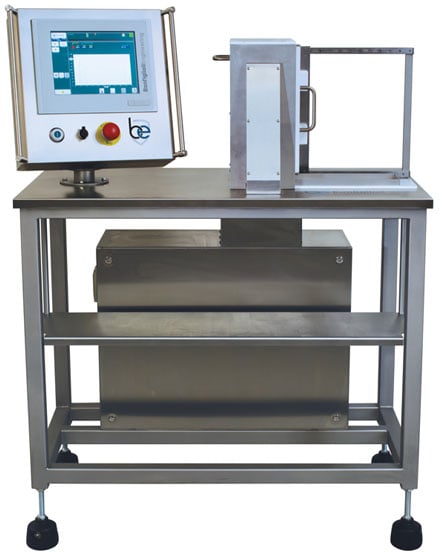
LDB Pro – IV Bag Leak Detection
Flexible containers require a consistent detection capability across film and seal variations. The LDB Pro is engineered to evaluate IV bag integrity within a compact laboratory footprint.
This system provides:
-
Repeatable detection of seal and film defects.
-
Configurable tooling for multiple bag formats.
-
Data suitable for investigation documentation.
-
Integration into controlled quality environments.
-
Supports controlled pharmaceutical qualityworkflows with 21 CFR Part 11-ready data handling,IQ/OQ availability, and design features that help facilities align with EU GMP Annex 1 expectations for sterile manufacturing environments.
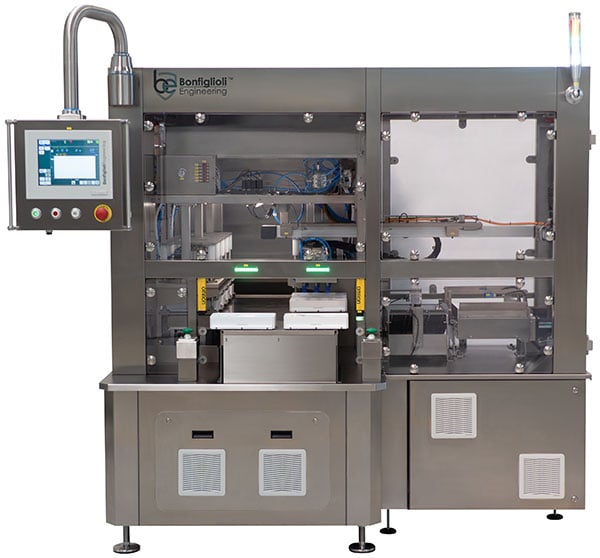
IVB Flex – High-Sensitivity IV Bag Leak Detection
For facilities requiring greater throughput in IV bag inspection, the IVB Flex combines deterministic vacuum decay testing with advanced magnetic transport technology to support high-sensitivity leak detection at production scale. It is specifically engineered for filled IV bags from 50 mL up to 1 L.
This system provides:
-
High-sensitivity leak detection for flexible IV bags used with saline, plasma, viscous, and oily-based contents.
-
Vacuum decay technology combined with frictionless magnetic transport to improve repeatability and reduce false rejects.
-
Non-contact handling that helps reduce mechanical wear and contamination risk.
-
Scalable system architecture with simple format changeover and removable test plates for efficient cleaning.
-
Real-time review, MES/LIMS OPC UA connectivity, and automated options to support controlled production environments
-
Alignment with USP <1207>, ASTM F2338, FDA cGMP, EU GMP Annex 1, and 21 CFR Part 11 for deterministic CCIT, compliant data management, and validation support.
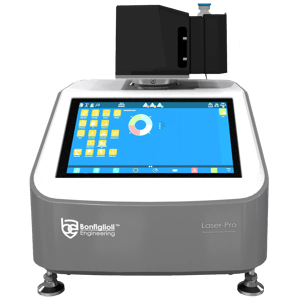
Laser Pro – Headspace Gas Analysis for Transparent Containers
Certain sterile products require verification not only of container integrity, but also of the protective atmosphere within the package. The Laser Pro is designed for non-destructive headspace gas analysis in transparent pharmaceutical containers such as ampoules, vials, and plastic containers.
This system provides:
-
Non-destructive, non-invasive analysis of specific gas concentration in the headspace of sterile transparent packaging.
-
In-process quality control.
-
Stable calibration for long-lasting reliability without nitrogen purging requirements
-
Safe, simple tooling placement with a sample housing unit designed to minimize outside influences.
-
Advanced data handling and validation support to facilitate traceable documentation and qualification activities
-
Alignment with USP <1207>, EU GMP Annex 1, 21 CFR Part 11, and EU Annex 11 for deterministic quality control, compliant software design, and structured validation support.
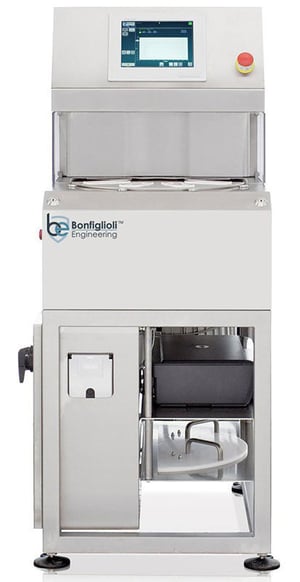
LF-SMH – Multi-Format Laboratory CCIT
Facilities managing multiple sterile container formats need a deterministic inspection platform that is flexible, repeatable, and suitable for both in-process and off-line quality control. The LF-SMH is a laboratory-scale, multi-head integrity inspection system designed for a wide range of finished and filled containers.
This system provides:
-
Non-invasive, non-destructive CCIT based on the vacuum decay method for microleak detection.
-
Compatibility with multiple container formats including ampoules, vials, prefilled syringes, pouches, IV bags, bottles, and other packaged presentations.
-
Fast, reliable, and repeatable test performance with vacuum and positive pressure testing capabilities.
-
Compact, robust design with quick changeover and low-maintenance operation suited to controlled laboratory environments.
-
Historical data storage and download capabilities for production data, raw data, events, and alarms.
-
Support for ASTM F2338, 21 CFR Part 11, EU Annex 11, and EU Annex 15, with a validation package designed to support qualification and regulatory compliance.
Deterministic CCIT Implementation in 503B Laboratory Environments
Bonfiglioli Engineering works closely with customers to support unique applications and environments.
-
Each application begins with a technical review of the container format and closure configuration. Critical dimensions, materials, and sealing characteristics are evaluated to determine the appropriate deterministic method.
-
Tooling is then engineered to match the specific geometry of the syringe, vial, or IV bag.
-
Test parameters are defined based on measurable detection performance and repeatability.
-
Lastly, the system configuration is customized to support structured qualification and integration into existing validation protocols.
The outcome is a controlled, reproducible CCIT process designed for routine laboratory use and suitable for regulatory evaluation.
Questions? Our team is available to help with a confidential consultation review.

U.S.-Based Application and Validation Support
Technical support is integral to compliance readiness. Bonfiglioli Engineering’s U.S.-based application engineering team assists with feasibility assessments, tooling configuration, and method development. Additionally, validation protocol templates and IQ/OQ guidance are available to support structured qualification.
Finally, training and service support ensure continuity from installation through routine operation. The objective is not only system delivery, but long-term reliability.
Alignment with USP <1207> and FDA Inspection Expectations
Deterministic methods aligned with USP <1207> principles establish defined detection capability and controlled performance limits.
- Sensitivity is confirmed during validation and maintained through repeatable test parameters in routine operation.
- System outputs are structured to support traceable documentation and consistent trending within existing quality systems.
- Integrity data can be reviewed and presented with confidence during an internal audit or regulatory inspection.
When testing methodology, documentation, and operational control are aligned, container closure integrity becomes a structured and defensible element of the sterility assurance program — not a vulnerability during inspection review.
Inspection readiness isn’t about having data, it’s about having defensible data. When detection limits are validated and performance is controlled, facilities can clearly demonstrate that their CCIT program is scientifically sound and consistently applied.

Is Your CCIT Program Inspection Ready?
Container closure integrity should withstand internal audit and regulatory scrutiny without hesitation. 503B facilities that take a structured, deterministic approach are better positioned to respond confidently during inspections, adapt to component changes, and maintain consistent sterility assurance across product formats.
If you are evaluating your current program, responding to Form 483 observations, or preparing for future regulatory review, we can help you find the right CCIT solution for your operating environment.
Request a Consultation
Frequently Asked Questions:
503B Container Closure Integrity Testing
What is deterministic container closure integrity testing for 503B facilities?
Deterministic CCIT uses quantitative, physics-based methods, such as vacuum decay or force decay, to detect leaks with measurable sensitivity and reproducibility. For 503B facilities, this approach supports objective sterility assurance and regulatory documentation
How does USP <1207> apply to sterile compounding operations?
USP <1207> outlines principles for container closure integrity testing, including expectations for deterministic methods and method validation. Facilities referencing this framework demonstrate alignment with recognized industry standards.
Can deterministic CCIT support a Form 483 response?
Yes. Objective, validated leak detection data can strengthen corrective action documentation when integrity observations have been identified during inspection.
Are laboratory-scale systems appropriate for 503B production volumes?
Yes. Systems designed for laboratory environments support validation, investigation, and routine monitoring without requiring high-speed production integration